Cargo Packaging
This page provides guidelines on how to pack shipments to ensure their rapid, reliable, and safe transportation by air.
The information given here is based on the instructions for packing airfreight issued by the Japan Aircargo Forwarders Association (JAFA) and Board of International Airfreight Carriers (BIAC)
Packing Shipments to be "Ready for Carriage" is the Responsibility of the Customer
The International Air Transport Association (IATA) rules state that the shipper is responsible for ensuring that the cargo is packed to ensure safe carriage with ordinary care in handling and in such a manner that it can withstand conditions likely to occur during ordinary carriage. (Tact Rule Book 2.3.1.1)
Here, “ordinary care in handling” and “conditions likely to occur during ordinary carriage” include the vibration, shaking, tilting, mechanical shock, changes in air pressure, and changes in temperature or humidity that occur during flight and cargo build-up work, including stacking in airfreight pallets or containers at the airport.
If cargo is not packed suitably, you may be asked to repack it.
Under the conditions of carriage, carriers are not responsible for any damage that results from unsuitable packing and payment of any requested compensation for damage may be declined.
Unlike maritime shipments in which cargo is packed into large and robust containers that are carried with minimal manual handling, airfreight undergoes a variety of manual and other handling during transit between the point of departure and final destination, as summarized in the typical sequence of steps described later. To make best use of the available cargo space on the aircraft, your shipment may be closely packed on an airfreight pallet or container along with other shipments.
Informed by a good understanding of how airfreight is handled, shippers are requested to pack their shipments in such a way that they can withstand ordinary carriage by air, including the stacking of cargo.
Packing of Airfreight Shipments
Airfreight shipments must be packed suitably to allow for safe, reliable, and rapid transportation. The following problems may arise if not packed suitably for air transportation.
- The goods contained in shipments are more likely to be damaged or otherwise degraded.
- There is a risk of damage to the aircraft or other cargo if shipments shift in transit or material leaks out. In this case, you may be asked to pay restitution for damage to other cargo or for the cost of aircraft repairs or cleaning.
- Excessive time taken to load shipments, including stacking on airfreight pallets or containers (ULDs), may disrupt aircraft schedules.
- The inability to pack shipments efficiently, including stacking on airfreight pallets or containers (ULDs), may prevent effective use of the available cargo space. The total amount of cargo able to be carried on the aircraft may also be reduced, resulting in shipments not being carried on the scheduled flight or higher transportation costs.
Accelerations Experienced by Cargo During Flight (G-factor)
It is necessary to consider the accelerations (G-factor) that shipments will experience during flight. Airfreight shipments may be exposed to sudden accelerations, including during taking off and landing, cruising, or when turbulence is encountered. The term used for this is G-factor. While the G-factor will vary depending on the type of aircraft, the conditions encountered, the directions of accelerations experienced, the position of the cargo, and so on, the accelerations typically experienced are up to 1.6G in the longitudinal direction of the aircraft (meaning goods will experience a force equal to 1.6 times their weight), 2.0G in the lateral direction, and 3G in the vertical direction. (However, accelerations may exceed these levels in some instances.)
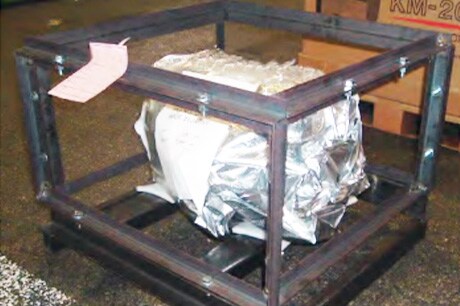
Please pay particular attention to G-factors when shipping small but heavy metal parts such as molds or transmissions. We request that you secure the item in a suitably robust metal frame, tie it down with bands or belts that are strong enough for the anticipated G-factors, and use packaging that is completely sealed from the outside.
Packaging Criteria
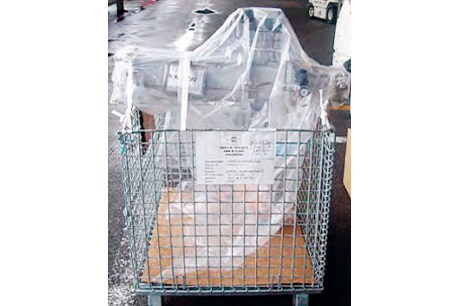
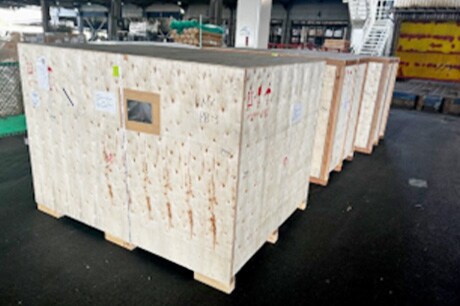
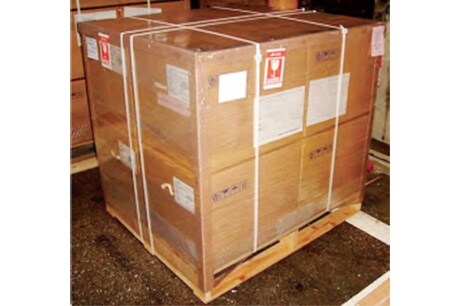
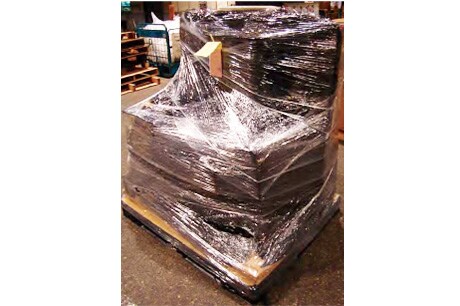
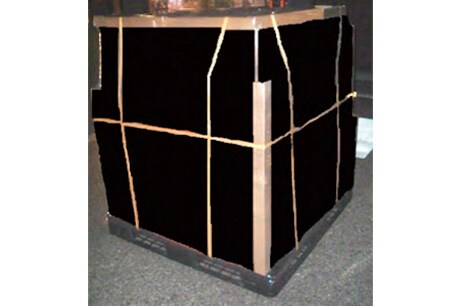
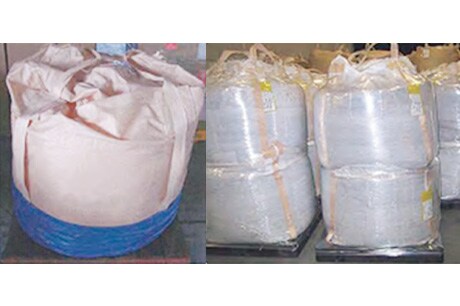
Ensure that all airfreight shipments are delivered to the airline or freight forwarder in fully enclosed (sealed) packaging such as a wooden or cardboard box.
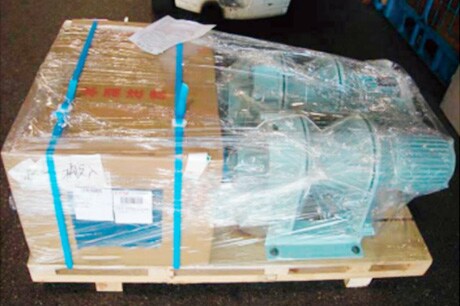
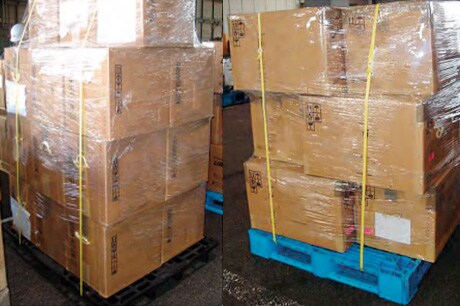
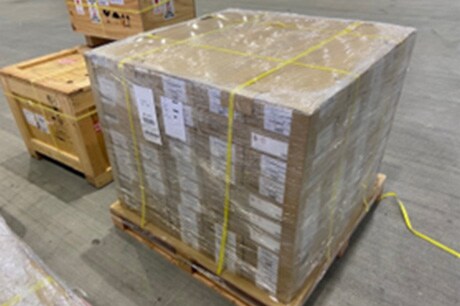
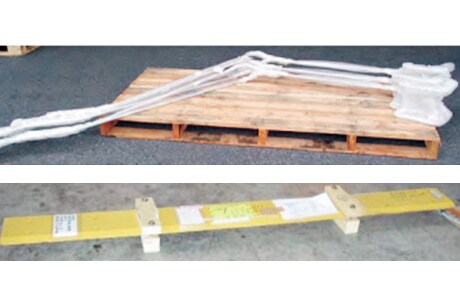
Some cargo that satisfy certain criteria may be packed on skids or a wooden frame (partial packaging). As airfreight must be packed efficiently into the limited space available, ensure that your packaging has a flat shape and that the top side is strong enough to allow for stacking up to 3m high.
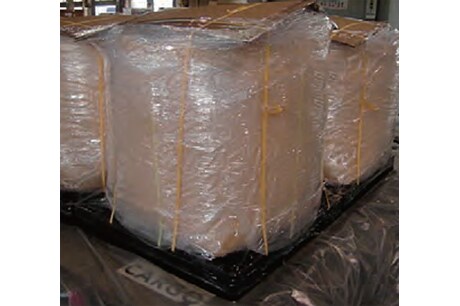
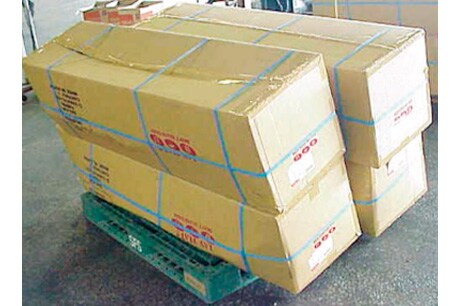
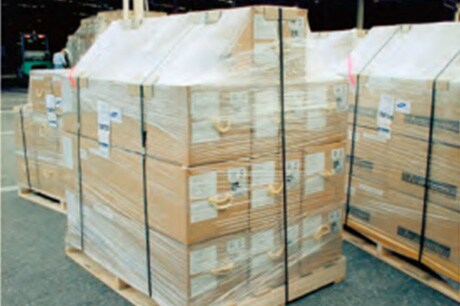
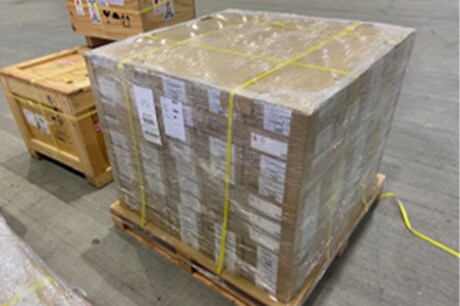
The following are examples of unsuitably packed goods and how the packaging can be improved.
Unsuitable shape Open
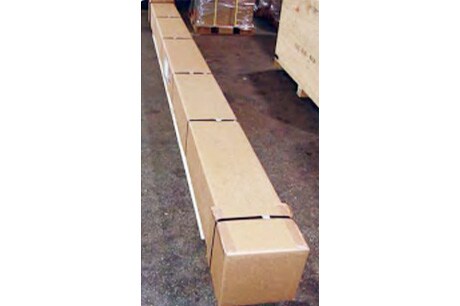
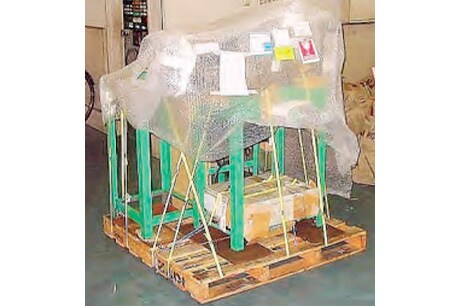
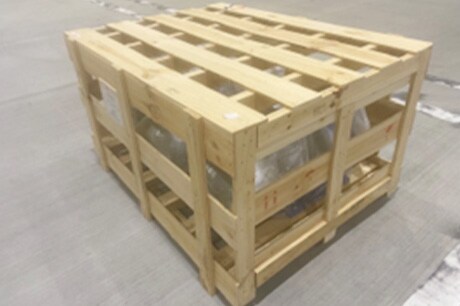
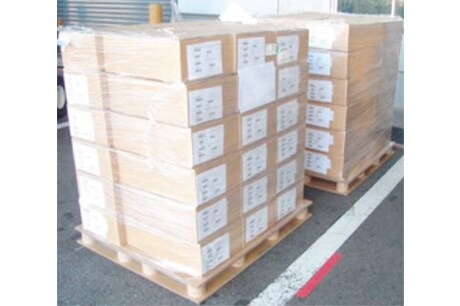
Insufficient strength Open
Does not allow for items to be placed on top Open
What does safety mean for airfreight?
What is meant by “safety” in the context of airfreight?
Three aspects of airfreight safety
1.Worker safety: Ensuring the safety of the people who do work that exposes them to risks such as working high above the ground or stacking heavy items.
2.Cargo safety: Ensuring that the goods and packaging are kept in the same condition as when they were received from the customer despite the harsh conditions to which cargo is subject when transported by air.
3.Aircraft safety: Preventing damage to the aircraft and avoiding disturbances to flight stability due to the cargo moving in transit or other such problems.
Please take time to determine how best to pack your goods so that they satisfy all these requirements for airfreight safety and are Ready for Carriage.
Support
We Transport Your Valuable Cargo with World-Leading Quality.