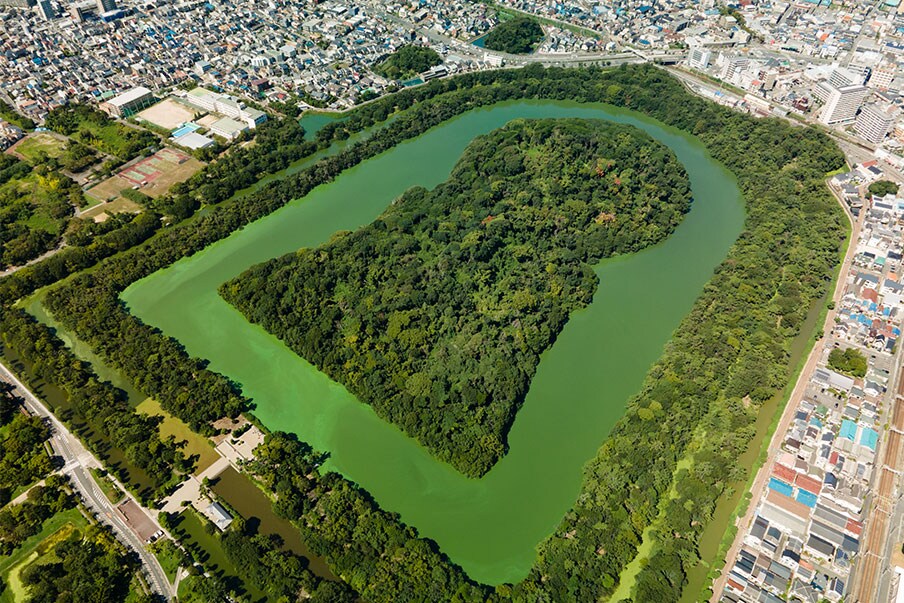
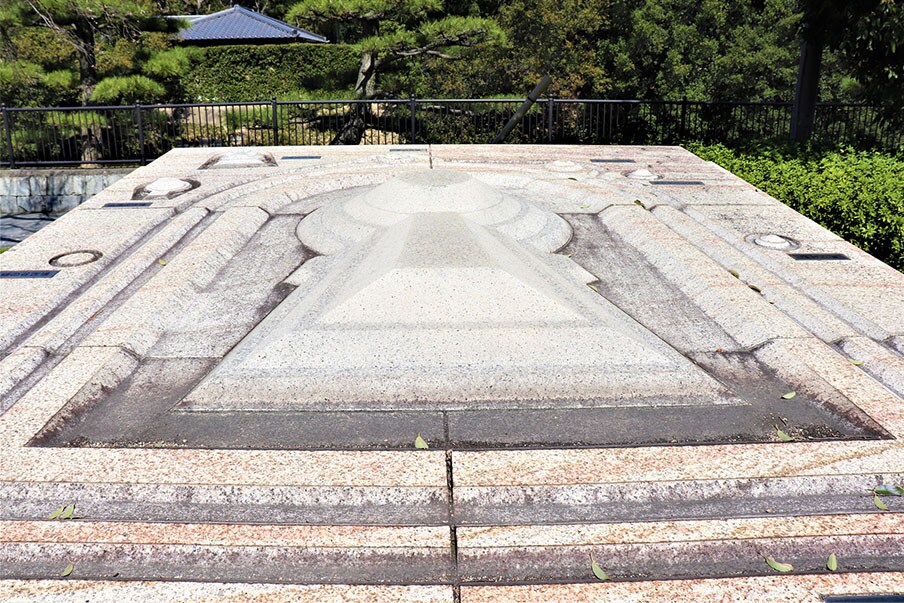
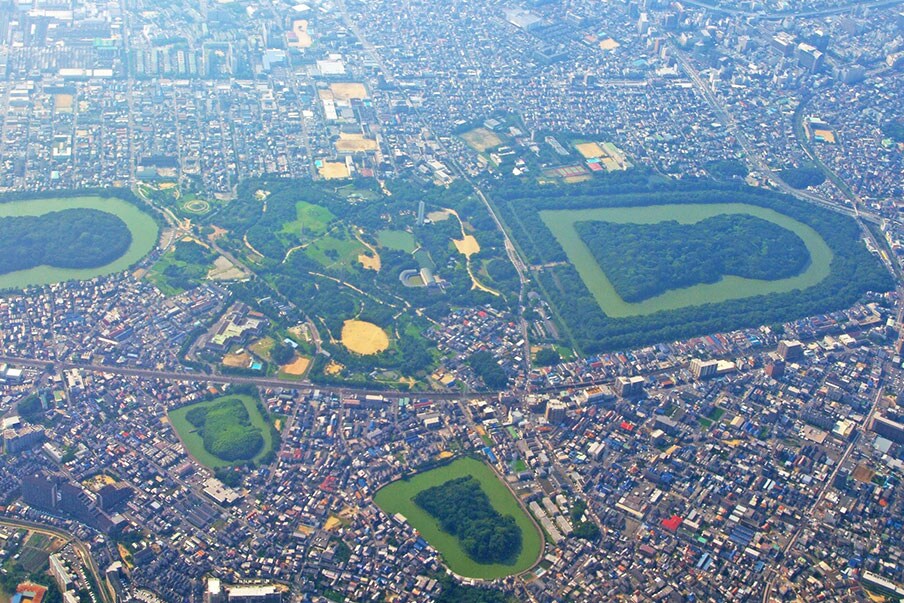
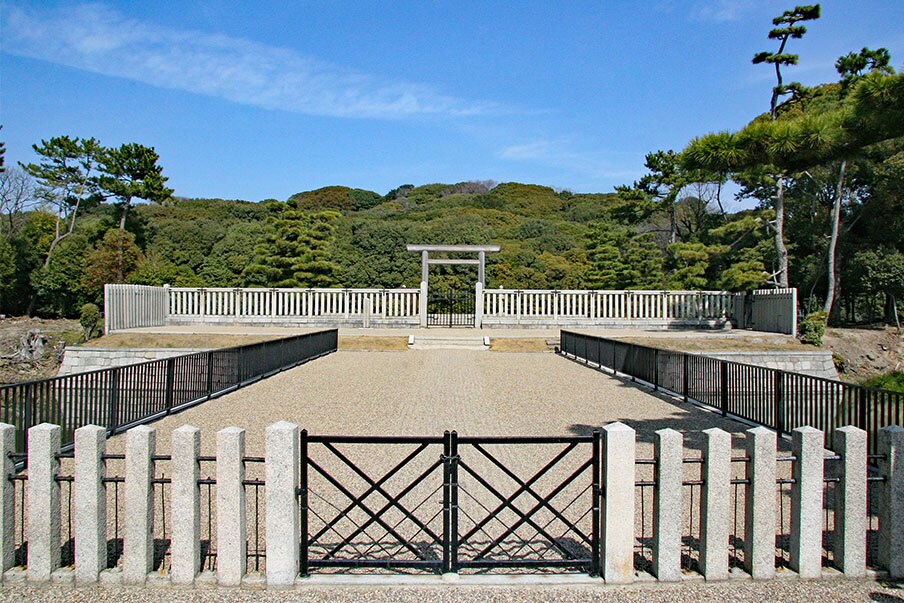
A bird’s-eye view shows the unique shape of each kofun, which could be any of the following: a keyhole (unique to Japan), a scallop shell, a circle, or a square.
These phenomenal architectural pieces were carefully designed according to a highly sophisticated funerary system that embodied the socio-political structure of the Kofun period. They present a hierarchy in descending order, with the keyhole being the largest and the most majestic—the burial site of emperors. The surrounding, smaller tombs hold the bodies of the other royalty.
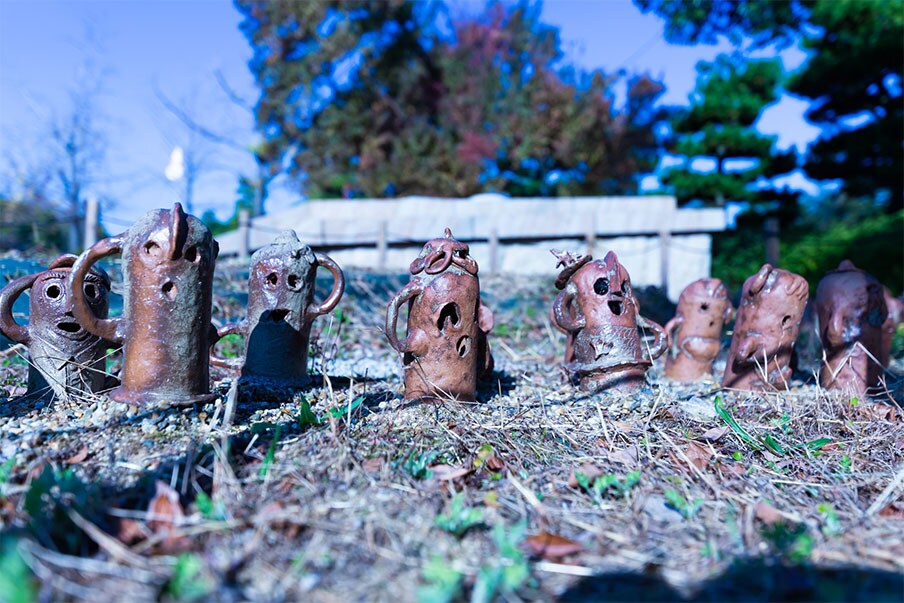
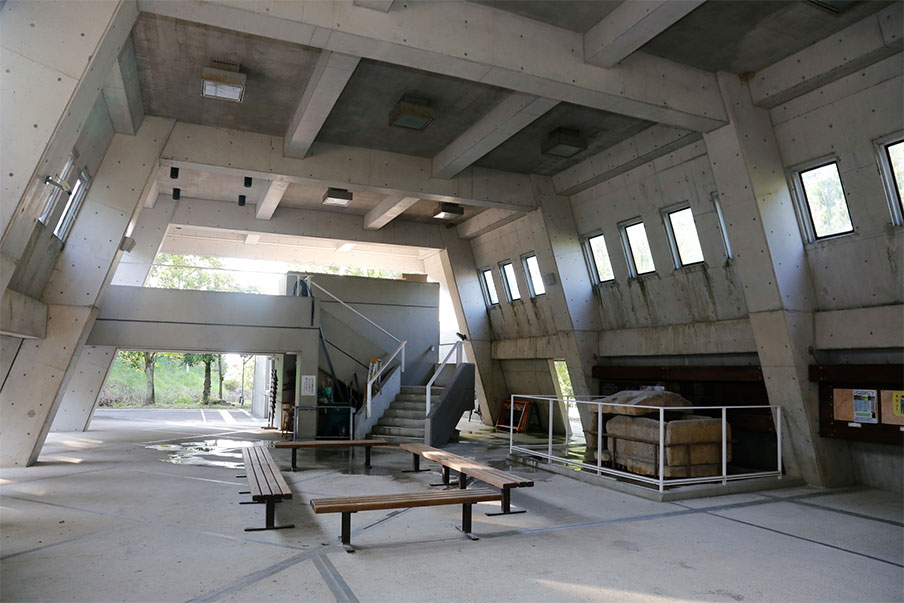
Around the kofun are significant decorations of paving stones and clay figures called haniwa. Unearthing these ancient artifacts helped to identify the period and status of each kofun, as there are not that many significant records about the period. Other discovered artifacts include armor, jewelry, art, and even miniature houses.
The number of haniwa, trinkets, weapons, and other items buried varied depending on the person’s status. Nintoku-tenno-ryo Kofun alone reportedly had almost 30,000 haniwa. Building this tribute to the fallen emperor took more than 15 years, with over 2,000 workers toiling every single day.












Share
SHARE